The Junk Drawer Is a Toy Store: Why Your Toddler Wants Your Keys, Wallet, and Remote
Photo: Mike Kirby, CC BY-SA 2.0, via Wikimedia Commons
Every parent knows the scene. You hand your two-year-old a brightly colored stacking toy, carefully chosen from a list of 'expert-approved brain builders.' They pat it once. Then they beeline across the living room, scale the couch like a tiny mountaineer, and grab your car keys off the counter.
Why? What do keys have that a light-up activity table doesn't?
More than you'd think. That fixation on your wallet, the TV remote, and the ancient flip phone in the junk drawer isn't random — it's one of the clearest windows into how your toddler's brain is growing. And once you understand it, you can turn the whole obsession into cheap, easy play.
It's Not the Object. It's What the Object Says.
Here's the core of it: toddlers aren't drawn to your keys because keys are fun. They're drawn to your keys because you use them, constantly, and they've noticed.
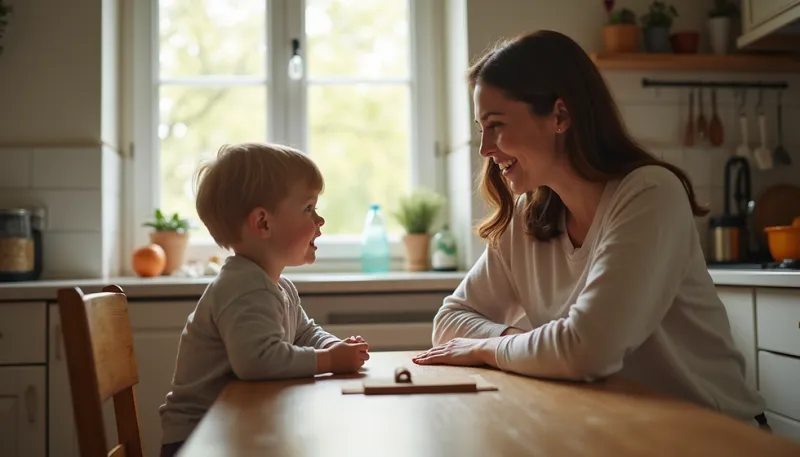
Developmental psychologists call this imitation play, and it's a cornerstone of early learning. Somewhere between 18 months and age three, kids start doing something remarkable: they stop just copying your actions and start representing them. When your toddler holds your keys to the door and mumbles 'go bye-bye,' they're not fumbling. They're running a mental simulation of your entire morning routine.
That's called symbolic thinking — the ability to let one thing stand in for another. It's the same skill that later lets a child understand that the letter 'B' stands for a sound, that a drawing of a dog means a dog, and eventually that the numeral 5 means five whole crackers. Every time your kid pretends to swipe a credit card or 'text' on your old phone, they're laying the cognitive foundation for language, math, and reading.
And the forbidden-object factor? That's real too. Your keys have weight, jingle, texture, and — most importantly — consequence. Toddlers are little researchers, and nothing signals 'important data' like an item that makes adults lunge across the room.
The Grown-Up Prop Kit: 10 Minutes, Basically Free
You don't need to buy anything. Wander your house (and, honestly, that junk drawer) and assemble a bin of safe stand-ins for the real deal. Store it somewhere your toddler can reach — that's part of the magic. The objects are 'theirs,' and the mystique of the off-limits version fades fast.
What goes in the kit:
- Retired keys. A few dead keys on a carabiner or lanyard. Jingle tested and approved.
- The defunct phone. That old iPhone in the drawer? Factory reset it, remove the SIM, and pop on a rugged case. Instant role-play device.
- A decoy wallet. Fill an expired-loyalty-card wallet with old gift cards and a few fake dollar bills. Great for 'store' games.
- The orphaned remote. Every house has one that matches nothing. Batteries out, tape over the compartment.
- A travel-size anything. Empty lotion bottle, a clean pill organizer (pills long gone), a mini first-aid kit box.
- A 'laptop.' A defunct tablet or an old keyboard with the cord cut off. Mine has typed approximately four thousand very important emails.
- A toy stethoscope or play medical kit. Because someone's always getting a checkup in this house.
Three Games to Play With the Kit
1. The Morning Routine Replay. Hand your toddler the keys and ask, 'Okay, are we going to the store or the park?' Watch them grab the wallet, the keys, maybe a diaper bag. Narrate what they're doing: 'You got your keys! You're buckling in!' You're building vocabulary and sequencing skills at the same time.
2. The Storefront. Set out a few snacks and a play register (or the decoy wallet). They 'pay,' you 'bag.' Swapping roles — now you're the customer, they're the cashier — stretches flexible thinking, which is a sneak-peek skill for kindergarten.
3. The Wrong-Tool Game. Hand them the remote and ask, 'Can you use this to brush your teeth?' The giggles that follow are funny, yes, but silly/serious sorting is real cognitive work. It means they know what each object is for — which is the whole point.
When to Let the Obsession Run Its Course
A few ground rules keep the grown-up game safe: nothing with button batteries, magnets, or coins; nothing that can pinch little fingers (real key rings are surprisingly dangerous — that's how the carabiner hack started); and any real electronics get stripped of power first.
And if your toddler stages a full breakdown because you used your actual keys instead of theirs? Congratulations. That outrage is proof they've built a whole story about who owns what and how the world works. It's inconvenient, loud, and exactly on schedule.
So the next time your kid bypasses the toy box for your beat-up wallet, don't fight it. Hand over the decoys and play along. That junk drawer you've been meaning to clean out? It's not clutter. It's curriculum.