Lights-Out, Brains Still On: 7 Whisper Games That Make Bedtime the Easiest Part of the Day

Photo: Pacific Southwest Region 5, Public domain, via Wikimedia Commons
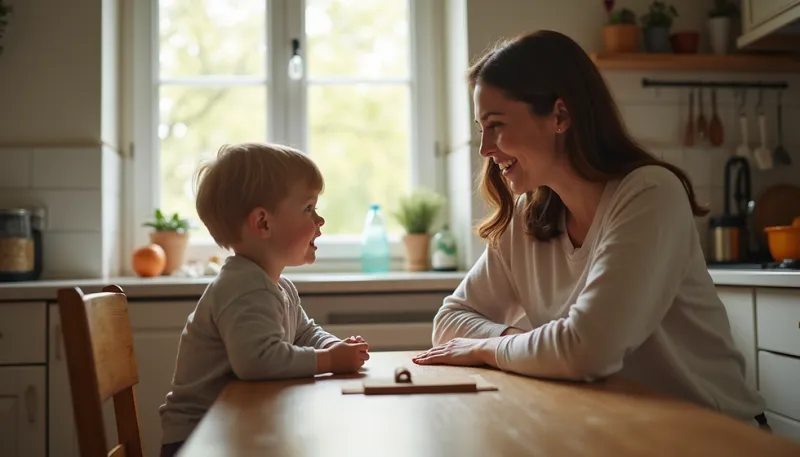
You've done bath time. You've done pajamas. You've done two books, one cup of water, and the mandatory pre-bed potty trip that your toddler insisted was urgent and then took forty-five seconds. And now you're standing at the door while a small person who has been awake for twelve hours looks at you with bright, fully-charged eyes like it's morning.
Here's the thing most bedtime advice skips: toddlers can't just flip from wiggly to sleepy on command. Their brains need a runway. The good news is that the runway doesn't have to be boring — it can be a game. A quiet game, played under blankets, that gives an active mind something to chew on while the body settles down.
We call it the wind-down stack, and it's built on a simple trick: instead of shutting your toddler's brain off, you give it a slow, dimmer-switch task to do on the way down.
Why Quiet Games Work (The 60-Second Science)
Pediatric sleep guidance is pretty consistent on the basics: toddlers need 10 to 14 hours of sleep in a 24-hour period, and a predictable routine is one of the most reliable predictors of falling asleep easily. What's happening under the hood is that consistent cues — same order, same low lighting, same calm voice — signal the brain that sleep is coming, which helps melatonin do its job.
The catch is that "calm" is not the same as "passive" for a 2- to 4-year-old. An idle toddler brain will generate its own entertainment, and that entertainment is usually "negotiate for one more book" or "announce that my foot itches in a way that requires a bandage." A low-stakes game occupies that mental energy with something slow and repetitive, which is exactly the kind of cognitive activity that eases the transition toward sleep.
One rule before we start: keep every game whisper-quiet, lights low, and bodies horizontal. The moment a game involves getting up, you've left the runway.
The 20-Minute Wind-Down Stack
Here's a sequence you can try tonight. Adjust the order — the point is rhythm, not rigidity.
Minutes 1–5: The Sleepy Color Hunt. With lights dim, ask your toddler to find something blue in the room without moving — just with their eyes. "Can you spot something blue? Now something soft? Now something round?" This one works double duty: it's a visual scan (quiet, restful) and it drifts attention toward familiar, cozy objects like the stuffed elephant on the shelf.
Minutes 5–9: Whisper What's Missing. You name three things you can see from the bed — "nightlight, curtains, duck" — then say them again with one gone: "nightlight, curtains... what's missing?" Toddlers love catching you, and the recall effort is just enough brain work to keep them engaged without winding them up. Take turns being the one who hides the word.
Minutes 9–13: The Guessing Game, Sleepy Edition. "I'm thinking of an animal. It's big. It's gray. It says..." Let them guess, then let them give you clues. Keep your voice slower and quieter with each round. This is sneaky vocabulary practice, too — animal sounds, sizes, colors.
Minutes 13–16: Story Backwards. Instead of a book, tell a three-sentence story with your toddler as the star — and tell it backward. "And then she went to sleep. Before that, she brushed her teeth. Before that..." The before-that structure is a genuine little logic puzzle, and the monotone delivery is a feature, not a bug.
Minutes 16–20: The Long Goodnight. Say goodnight to things, slowly, from the bed. "Goodnight lamp. Goodnight window. Goodnight toes." You can add a body-scan twist: "Are your feet sleepy yet? Are your knees sleepy?" By the time you've said goodnight to the ceiling, most kids are halfway gone.
You don't need all five every night. Some nights the color hunt alone will do it. Think of it as a menu, not a checklist.
When Your Kid Fights Bedtime Anyway
Some toddlers treat the wind-down stack like a hostage negotiation opener. A few troubleshooting notes:
The game revs them up instead of calming them down. Some kids get competitive or giggly. Drop the question-answer format and go pure narration: describe the room out loud in a slow voice while they just listen. "The curtain is moving a little. The fan is going around..."
They want the same game forever. Great. Repetition is the point. The same three games every night is a feature — predictability is what signals sleep to the brain. Rotate only when you're bored.
They pop out of bed. Calmly and boringly return them, then resume the game mid-sentence like nothing happened. "...and goodnight to the bookshelf." No scolding, no new energy. Bedtime stays a place, not a battle.
One parent's games work and the other's don't. Totally normal. Kids associate different voices and styles with different energy levels. Whatever works, keep working it — consistency beats variety at 7:45 p.m.
The Real Secret
The wind-down stack isn't really about the games. It's about giving you a script. Bedtime resistance often spikes when parents run out of moves — the books are done, the songs are sung, and the only remaining tool is repetition of "lie down, please." Having a small stack of quiet teasers in your back pocket means you always have one more calm, engaging thing to offer.
So tonight, dim the lights, whisper the first color hunt, and see what happens. Worst case, you spend twenty pleasant minutes playing spy games with a toddler. Best case, you get your evening back by 8:00.