When the Sticker Stops Working: Rethinking Rewards for 2- to 4-Year-Olds
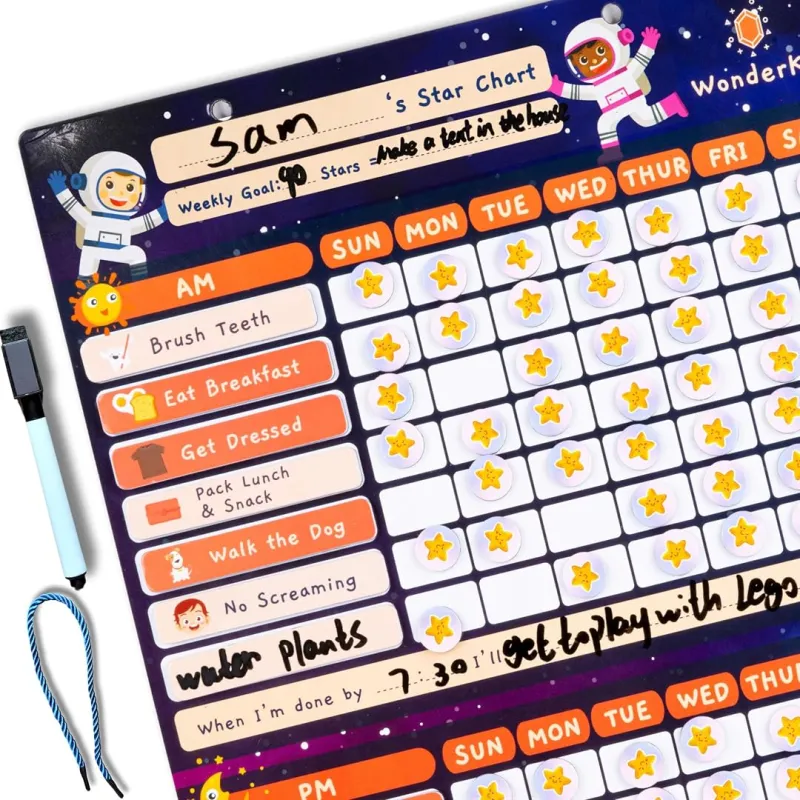
Photo: toddler sticker chart on refrigerator with parent and child, via m.media-amazon.com
Walk into any preschool pickup line in America and you'll spot it: the laminated chart. Five boxes, a row of glittery stars, maybe a Saturday trip to Target promised at the end. Sticker charts are basically the unofficial currency of toddler parenting — and honestly, we get the appeal. They're visual, they're cheap, and they give you something to point at when your three-year-old asks why they have to brush their teeth again.
But here's the thing nobody puts on the chart: somewhere around week three, the sticker stops working. Your kid starts asking what they get for putting on shoes. They finish a chore, then turn around with an open palm. Congratulations — you've accidentally hired a tiny union rep.
What the Research Actually Says
Psychologists have been poking at reward systems since the 1970s, and the findings are surprisingly consistent. The big one is called the "overjustification effect" — when kids get external rewards for something they already enjoyed doing, their internal interest in that activity actually drops. In one classic study, kids who expected a prize for drawing spent less time drawing afterward than kids who just got to draw.
For toddlers, the stakes are even higher because they're at the age where "why?" is their entire personality. Reward systems answer the wrong question. Instead of teaching them that brushing teeth matters, the chart teaches them that brushing teeth is a transaction. And toddlers are ruthless negotiators. They will absolutely hold out for two stickers instead of one. They will retroactively demand payment for things they did before the chart existed.
None of this means you're a bad parent if a chart is currently taped to your fridge. It means the tool has limits — and knowing them helps you use it (or drop it) on purpose.
The Middle Ground: Rewards Aren't Villains
Let's be real — sometimes a bribe gets you through a grocery store trip, and that's fine. The problem isn't rewards themselves. It's rewards as a long-term habit-building system for things toddlers should eventually do automatically.
A useful rule of thumb: use a treat to get through a hard moment (a lollipop at the end of a brutal haircut), not to build a daily routine (a sticker every time they pee). One is a tool. The other is a salary.
Swap-In Strategies That Actually Stick
So if the chart comes down, what goes up? Try these parent-tested alternatives:
The praise script. Be specific and quick: "You put your plate in the sink without being asked — that was so helpful." Naming the exact behavior does more for a toddler's brain than a star ever will. Keep it short; gushing can backfire too.
Routine races and games. Turn teeth-brushing into a "beat the song" challenge, or clean-up into "can you find everything red?" The fun is the reward, and it never requires a payout.
Mystery Helper days. Once or twice a week, your toddler wakes up to discover they've been secretly chosen as the day's Mystery Helper — a role that comes with important jobs like matching socks or carrying the mail. The unpredictability keeps it exciting, and the "work" becomes the privilege.
The celebration instead of the prize. When they nail a new skill, do a family dance, a high-five chain, or a special bedtime story. Connection is a stronger motivator for little kids than stuff.
Let natural consequences lead. If they refuse the raincoat, they get cold for two minutes and the coat goes on. Toddlers learn faster from experience than from charts — within reason and safety, of course.
If You Keep the Chart, Keep It Honest
Some kids genuinely love visual trackers, and that's okay. If yours does, a few tweaks keep it from becoming a negotiation table:
- Reward effort and first tries, not just perfect outcomes
- Retire the chart once the habit holds — usually a few weeks, not months
- Make the end goal about the activity itself ("now you can do it all by yourself!") rather than a purchased prize
The goal was never the sticker. It was a kid who brushes their teeth at seven because it's just what we do at seven. That habit lives in routine and connection — and it doesn't cost a thing at the prize bin.