Little Bursts, Big Brains: The Case for the 5-Minute Play Session

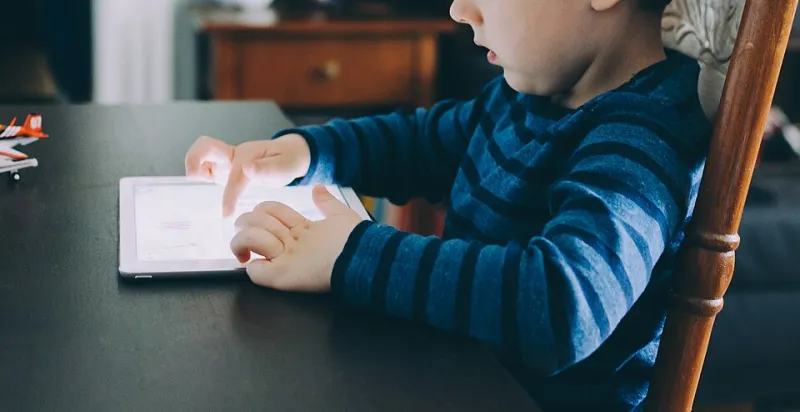
Photo: MIKI Yoshihito, CC BY 2.0, via Wikimedia Commons
Raise your hand if you've ever spent an entire nap planning a gorgeous sensory bin, only to have your toddler dump it, stir it once, and wander off to bang a spoon on the wall. (Both our hands are up.)
Here's a slightly rebellious thought: maybe the marathon activity isn't the goal. Maybe the secret sauce is the opposite — tiny, quick-hitting play sessions that take less time than brewing your coffee.
The Attention Span Reality Check
Ask any early childhood educator and they'll tell you the same thing: toddlers aren't built for long stretches of structured play. A commonly cited rule of thumb among developmental specialists is that little ones can focus for roughly two to three minutes per year of age. So your two-year-old? You're working with maybe five minutes of genuine engagement. On a good day. Before snack.
Dr. Dana Suskin's research on young children and learning suggests that kids learn best in short, back-and-forth interactions — the kind of quick serve-and-return exchanges that happen naturally in bite-sized play. Meanwhile, the American Academy of Pediatrics emphasizes that young children learn through brief, responsive, playful interactions rather than lengthy instruction.
Translation? That 5-minute puzzle session you squeezed in while pasta water boiled? That's not a consolation prize. That might be the main event.
Why We're Fans of the Five-Minute Rule
We're not anti-big-activity. Paint days and obstacle courses have their place. But here's our honest opinion, backed by what we see in our own kitchens every day: short play bursts work better because they:
- Match the brain you've got. You're not fighting a toddler's attention span — you're riding it.
- Lower the stakes. No 40-minute setup means no meltdown when it flops in 90 seconds.
- Add up fast. Six micro-sessions a day equals 30 minutes of deliberate, brain-building play without anyone feeling like they ran a marathon.
- Fit real life. Waiting for the school pickup line? Micro-game. Dinner in the oven? Micro-game.
A Sample 5-Minute Day
Wondering what this actually looks like? Here's a day built entirely around bite-sized brain teasers:
- 7:30 a.m. — Breakfast Sort. Hand your toddler a small pile of cereal and ask them to sort it by shape into two muffin tin cups. Skill: classification.
- 9:00 a.m. — Sock Match Sprint. Pull five mismatched socks from the laundry basket. Two minutes of matching chaos. Skill: visual discrimination.
- 11:30 a.m. — What's Missing? Place three kitchen items on the counter, have your toddler close their eyes, remove one. Skill: memory.
- 2:00 p.m. — Post-Nap Pattern Break. Line up a spoon, block, spoon, block — see if they continue the pattern. Skill: early math logic.
- 4:30 p.m. — Silly Sound Stop. Say a word, ask for a rhyming one (real or nonsense — nonsense is funnier). Skill: phonemic awareness.
- 6:00 p.m. — Dinner Table Riddle. One simple riddle while everyone settles in: "I'm yellow, I grow on a tree, monkeys love me. What am I?" Skill: reasoning and vocabulary.
That's a full day of brain-building for a total of maybe 25 minutes of active effort — most of it done while you were already busy with something else.
Your Fridge-Ready Micro-Activity Cards
To make this genuinely easy, we put together a set of printable micro-activity cards. Print them, cut them, stick them on the fridge with a magnet clip, and let your toddler pick one whenever you've got a spare five minutes. Giving them the choice adds a little autonomy boost — and toddlers love being the boss of something.
What's on the cards:
- Color Hunt — "Find me three things that are blue!" (Scavenging + color recognition)
- Freeze Dance Countdown — Dance until the timer beeps. (Listening skills + gross motor)
- Mystery Bag — Hide a household object in a pillowcase, guess by touch. (Tactile reasoning)
- Copycat Clap — You clap a rhythm, they copy it. (Auditory memory)
- Tall Tower Tumble — Build the tallest block tower in two minutes. (Fine motor + cause and effect)
- Whisper Game — Whisper an instruction across the room. (Listening + self-regulation)
- Shape I-Spy — "I spy something shaped like a circle." (Shape awareness)
- Animal Parade — Act out three animals, others guess. (Imagination + vocabulary)
- Body Part Blitz — "Touch your elbows! Your knees! Your nose!" (Body awareness)
- Story in Three — Make up a three-sentence story together, one line each. (Narrative skills)
The Bottom Line
If you take one thing from this piece, let it be this: you don't need more time. You need smaller pieces of the time you already have. Five minutes of real connection and problem-solving, repeated across a day, beats the guilt of the never-happened 45-minute craft every single time.
So the next time your toddler abandons your elaborate setup in 90 seconds, don't sweat it. Just grab a card off the fridge and start the next round. Little bursts, big brains.