Laundry Sorter, Sign Language Star: 9 Skills Your Toddler Is More Ready For Than You Think
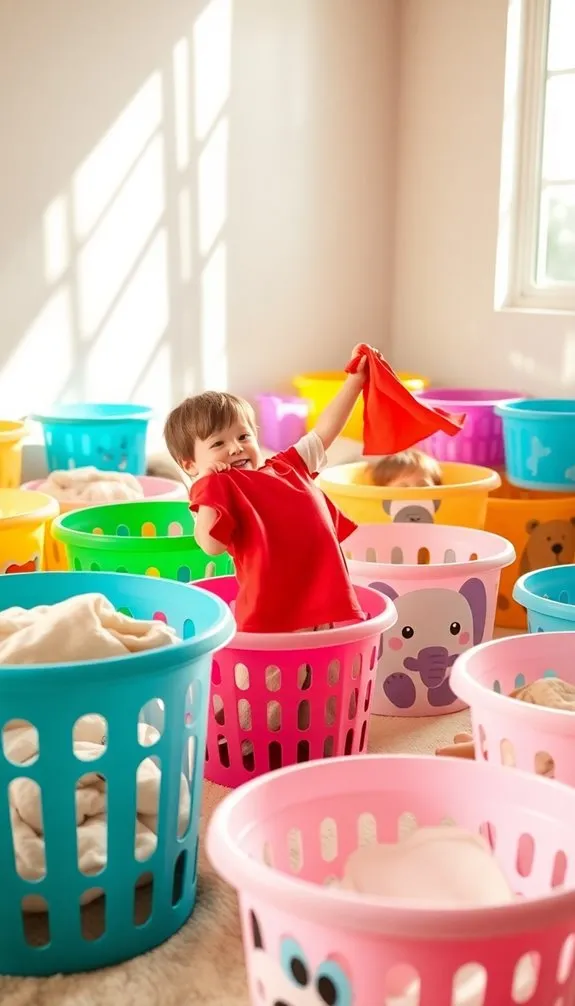
Photo: toddler sorting colorful laundry basket at home, via www.ozaclean.com
There's a moment every parent hits: you hand your two-year-old a sock and ask them to put it in the laundry basket, and they actually do it. Then they do it again. And suddenly you're wondering — what else have I been underestimating here?
Quite a lot, as it turns out. Toddler brains are building connections at a staggering pace, and everyday moments — folding clothes, waiting at a red light, handing you a snack — are packed with learning opportunities hiding in plain sight. This isn't about pushing your kid to be a milestone overachiever. It's about noticing what they're already ready for and making it fun. Here are nine skills worth trying tonight.
1. Sorting Laundry by Color
Around age two, most toddlers can match and sort by color — a genuine pre-math skill. Instead of sorting laundry alone after bedtime, dump a small basket of darks and lights on the floor and make it a game: "Can you find all the blue things?" Wrong answers are fine; the sorting action is the point. Bonus: you get help, sort of.
2. Basic Sign Language
Even verbal toddlers benefit from a few signs — it gives them a way to communicate when words fail, which cuts down on frustration tantrums. Signs for "help," "more," "all done," and "please" are the heavy hitters. You don't need fluency. Learn four signs from a quick video and use them consistently during meals and play. Toddlers pick up new signs in days, not months.
3. Taking Turns in a Simple Board Game
Yes, before three. Games like First Orchard or a homemade color-matching path teach turn-taking, waiting, and following rules — the foundational executive function skills that preschool teachers dream about. Keep sessions short, expect the rules to be loose, and narrate the turn-taking: "My turn... your turn!" The waiting is the skill, not the winning.
4. Following a Two-Step Direction
"Get your shoes and put them by the door." Two-step instructions are a classic developmental marker, and the best practice is embedded in real life. Make it playful by turning it into a mission: "Agent, find the red cup AND bring it to the table." Celebrate completion like they just defused a bomb.
5. Matching Pairs (Socks, Lids, Containers)
Matching is a quieter cousin of sorting and a genuine cognitive leap — it requires holding one object's qualities in mind while scanning for its partner. Hand over the sock pile, the Tupperware cabinet, or a memory card game with four pairs. The Tupperware cabinet might be the highest-value toy in your kitchen.
6. Putting On Their Own Shoes (and Maybe a Jacket)
Self-dressing is less about coordination and more about opportunity. Two-year-olds can manage slip-ons, Velcro straps, and the famous "flip trick" for jackets — jacket on the floor, arms in, flip it over their head. Expect wrong feet. Resist fixing it unless they're headed somewhere puddle-adjacent. Competence builds through doing, not through doing it correctly the first time.
7. Counting Objects (Not Just Reciting Numbers)
Many toddlers can recite "one, two, three" long before they understand quantity — but around two and a half, real one-to-one counting clicks. Practice with snacks: "You have three crackers. One... two... three!" Count stairs, count toes, count the dogs on your walk. Real objects beat flashcards every single time.
8. Simple Pretend Play Sequences
Feeding a doll, then putting it to bed, then covering it with a blanket — that's a three-step pretend sequence, and it's a marker of symbolic thinking, which underpins language and imagination. You can feed it by joining in: hand your toddler a "phone" (a banana works), and see what they do. Follow their lead rather than directing the story.
9. Naming and Managing Big Feelings
This one sounds advanced, but toddlers as young as two can learn to label emotions — theirs and others'. The tool is simple narration: "You're frustrated because the tower fell." Read faces in picture books: "Look, he looks sad." Kids who can name a feeling have a head start on taming it, and honestly, so do the rest of us.
The Low-Pressure Bottom Line
Notice what's missing here: worksheets, flashcards, enrichment apps, or any suggestion that your toddler is behind. These skills emerge through ordinary life, repeated in a playful way. If your toddler isn't into one of these tonight, try again next week — readiness is a window, not a deadline. If they're into all nine, wonderful. Either way, the sorting laundry one is worth it purely for the help.