Let's Talk About the Tablet: What Screen Time Research Really Says (Minus the Guilt Trip)
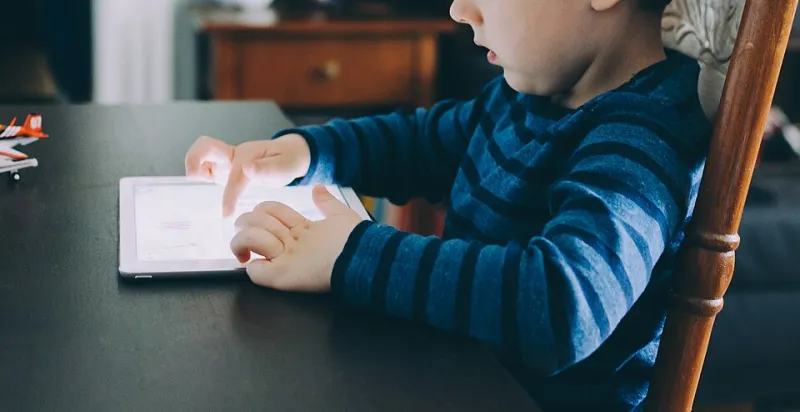
Photo: StockSnap, CC0, via Wikimedia Commons
Somewhere along the way, screen time became the third rail of modern parenting. Mention that your toddler watched twenty minutes of something on a tablet while you finished a work call, and you can practically hear the judgment echoing through the group chat. Meanwhile, the other side of the feed insists that anyone shaming parents has clearly never tried to cook dinner with a two-year-old wrapped around their leg.
Both camps are exhausting. And honestly? Neither one is paying close enough attention to what the actual research says.
What the Guidelines Actually Say
The American Academy of Pediatrics recommends that children ages 2 to 5 get no more than one hour of high-quality programming per day, ideally co-viewed with a parent. For kids 18 to 24 months, the guidance leans toward avoiding digital media except for video chatting — think FaceTime with grandma in Ohio.
Notice what's missing from that guidance: any suggestion that an hour of thoughtful content is going to melt your child's brain. The AAP's framework is about balance and quality, not zero tolerance. It's a guardrail, not a verdict.
The trouble is that guidance gets flattened into headlines. "Screens bad" is a much easier story to sell than "it depends on the content, the context, and what the child isn't doing because of it." And "it depends" doesn't rack up clicks or shame anyone into sharing.
What the Research Actually Shows
Here's the nuance the panic posts skip over: study after study suggests that what young children watch and who they watch it with matters far more than raw minutes logged.
Content that's fast-paced, flashy, and designed to hijack attention? That's associated with worse self-regulation outcomes. Slow-paced, story-driven, educational content? The effects are far more muted, and in some cases, kids genuinely learn from it. Research on well-designed educational media has shown toddlers can pick up vocabulary and concepts from quality programming — especially when a grown-up is nearby to talk about it.
Context matters too. A tablet on a long car ride through Nebraska is not the same as a tablet parked in front of a kid all afternoon while a parent scrolls nearby. And a child who spends hours a day on a device at the expense of play, movement, and face-to-face interaction is in a different situation than one who watches a show and then goes straight to the block bin.
None of this means screens are a free pass. Excessive, unsupervised, low-quality screen time does carry real concerns — sleep disruption, less interactive play, displaced language time. The research isn't silent. It's just specific.
The Framework: Quality Over Quantity (Within Reason)
If you're juggling a job, a household, and a small person who naps unpredictably, here's a practical way to think about it:
1. Pick content with a purpose. Look for apps and shows built on actual early learning principles — slow pacing, clear narratives, real curriculum. Think along the lines of Khan Academy Kids, PBS Kids games featuring characters from shows like Daniel Tiger, or apps from Sesame Workshop. If an app is built to maximize watch time with autoplay and endless rewards, treat that as a red flag, not a feature.
2. Co-play when you can, not always. The research on co-viewing is strong: kids get more out of screens when a parent talks with them about what's happening. But "when you can" is doing real work in that sentence. Aim for co-play on some days, not every session. Asking "What did the character do when she felt mad?" afterward counts too.
3. Anchor screens to your hardest windows. The 5 p.m. dinner-prep hour. The important video meeting. The day you're running on four hours of sleep. Using screens strategically during genuine need is not a failure — it's resource management.
4. Protect the non-negotiables. Sleep, movement, outdoor time, and back-and-forth conversation are the pillars. If screen time starts eating into those, that's your signal to adjust — not because you're failing, but because those things are doing the heavy lifting for development.
5. Watch yourself, too. Kids learn more from what we do than what we say. If your own phone is glued to your hand during playtime, no app restriction will outweigh that. (We say this with love, and with guilt of our own.)
The Bottom Line
The screen time wars thrive on absolutes, and absolutes are a terrible fit for real family life. The evidence points somewhere more boring and more hopeful: quality content, some parental involvement, and a life rich in play and conversation make an hour of tablet time a rounding error, not a catastrophe.
So the next time the guilt creeps in — or the judgment arrives from someone whose toddler has never seen a screen but has definitely eaten sand — remember this. The research was never about being perfect. It was about being intentional.
Little minds, big fun. Sometimes that fun comes from a puzzle, a pantry game, or a good old-fashioned cardboard box. And sometimes, on a Tuesday at 5:15 p.m., it comes from a tablet. Both are okay.