Pots, Pans, and Pure Joy: How to Build a Kitchen Band That Actually Teaches Rhythm
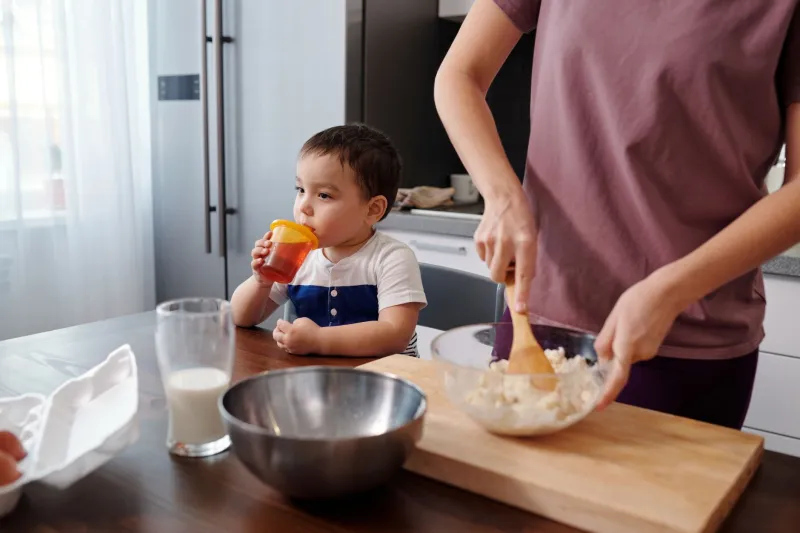
Somewhere between the spatula your toddler bangs like a gavel and the pot lid that doubles as a cymbal, there's a music class waiting to happen. And unlike the 10-week kind at the community center, this one is free, requires zero enrollment paperwork, and lets your kid wear pajamas.
Welcome to the kitchen band.
Why Your Cookware Is Secretly Educational
Music educators have been saying it for decades: rhythm comes before reading. Early beat exposure — the kind where a toddler physically hits something on the beat — lays groundwork for language development, counting, and motor planning. A 2-year-old doesn't need a tiny violin. They need something to strike, shake, or scrape, and permission to be loud.
Cookware delivers all three. A wooden spoon on a mixing bowl gives instant sound feedback. A rice-filled container becomes a shaker. And unlike a fancy toy instrument, kitchen gear produces real, satisfying, grown-up-adjacent noise — which, to a toddler, is the whole point.
Stocking the Band: A Five-Minute Setup
Grab a tote bag and pull together:
- The drum section: Two mixing bowls and a wooden spoon (the classic)
- The cymbals: Pot lids, ideally two, for dramatic crashes
- The shakers: Sealed containers with a handful of dry rice or pasta — tape the lids, trust us
- The tambourine: A metal baking sheet with a few loose magnets on top
- The guiro: A ridged measuring cup and a butter knife (handle side, obviously)
Set it all out on the kitchen floor, announce that the band is forming, and watch your drummer-in-chief emerge.
A Week of Themed Jam Sessions
To keep the novelty alive, give each day a theme. It takes 30 seconds of prep and turns random banging into a game.
Monday — Spoon Drums. Put a mixing bowl upside down in front of your toddler and show them fast versus slow. Say the words out loud: "Slow... slow... FAST!" They're learning tempo without knowing the word exists.
Tuesday — Tambourine Lids. Two pot lids, one in each hand. Clap them together on a steady count: one-two-three-four. Counting out loud sneaks in number sequencing while you're at it.
Wednesday — Shake It Like You Mean It. Shakers only today. Play a favorite song and challenge your toddler to shake only when the music plays. Freeze when it stops. This stop-and-go skill is real self-control practice disguised as a dance party.
Thursday — Loud and Soft. Introduce dynamics: "Can you play LOUD? Now whisper-quiet?" Volume control games are sneaky fine-motor work — it takes actual skill to hit gently.
Friday — Follow the Leader. You play a pattern (boom, boom, shake), and your toddler copies it. Then swap roles. This echo game builds working memory and listening skills, and toddlers find it hilarious when they get to be the boss.
Saturday — Family Concert. Everyone gets an instrument. Stuffed animals make a great audience. Tickets are free; encores are mandatory.
Sunday — Kitchen Band Rest Day. Even rock stars nap.
A Few Ground Rules (From Survivors)
Designate the instruments — once a pot is officially in the band, it's not also your pasta pot for the night. Keep a dedicated bin so cleanup is part of the game, not a battle. And if the noise level tips past fun into headache territory, introduce the "quiet hands" version: tapping on your toddler's own knees to the beat. It counts, and your ears will thank you.
The magic of the kitchen band isn't the sound quality. It's that your toddler learns they can make music — that rhythm lives in their own two hands — long before any teacher hands them a recorder. Start the band. Save the encore for bedtime.