Suds and Hypotheses: Turn Bath Time Into Your Toddler's First Science Lab
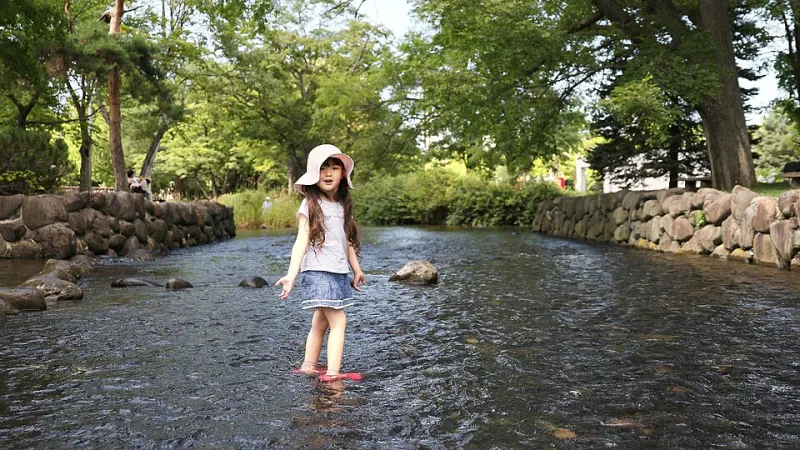
Photo: MIKI Yoshihito, CC BY 2.0, via Wikimedia Commons
Here's a confession from the trenches of parenting: some of my best teaching happens at 6:45 p.m., when I'm up to my elbows in bubbles and my toddler is pouring water over her own head for the eleventh time.
Bath time gets a bad rap as a chore — one more item between you and bedtime. But look at it through a different lens: you have a warm, contained, waterproof environment where mess is literally the point. That's not a chore. That's a laboratory.
And the best part? When the experiment is over, you pull the plug and the lab cleans itself.
Why Water Play Is Secretly a Brain Builder
We asked around, and early childhood educators consistently rank water as one of the most underrated sensory learning tools for ages 1 to 4. "Water is the great equalizer," says one preschool director we spoke with. "It behaves predictably enough that toddlers can start forming hypotheses, but it's surprising enough to keep them testing those ideas over and over."
Think about what's actually happening when your two-year-old dumps a cup of water for the hundredth time. They're not making a mess — they're running an experiment. Does it still fall? Does it still splash? Every pour is data collection.
Water play also sneaks in foundational physics concepts: volume, gravity, buoyancy, flow. It builds fine motor strength (squeezing sponges, working pump bottles) and introduces early math language — full, empty, more, less, heavy, light — without a single flashcard.
So tonight, skip the default splash session and try one of these. Most need nothing more than what's already in your kitchen.
The Ten Experiments
1. The Great Sink-or-Float Census. Grab a small basket of waterproof odds and ends: a spoon, a rubber duck, a bar of soap, a plastic lid, a washcloth, a toy car. Before each item hits the water, have your child vote: sink or float? Keep a simple tally on the tile with a washable crayon. Prepare to be humbled — the soap floats, and it will blow their mind.
2. Ice Cube Melting Races. Drop in one ice cube in each hand (or one in warm water, one in cool) and race to see which melts first. Ask questions: Which one is winning? What could make it melt faster? Blowing on it counts as legitimate scientific method.
3. The Sponge Pour Station. Two bowls, one sponge. Your toddler soaks the sponge in one bowl and squeezes it into the other. It's a transfer game, a hand-strength workout, and weirdly meditative. Some kids will do this for an entire bath.
4. Bottle Symphony. Line up a few empty bottles and fill them to different levels. Blow across the tops or tap them with a spoon. Low water, high note? Let your little musician figure out the pattern.
5. The Sinking Ship Challenge. Float a plastic container "boat" and have your child add small waterproof toys one at a time. How many passengers before it goes down? This is real engineering — load, balance, and capacity — disguised as drama.
6. Shadow Splash. With the bathroom light low and a small flashlight, shine light on the water's surface and watch reflections wobble on the ceiling. Free physics, major wow factor.
7. Waterfall Engineering. Stack cups with holes poked in the bottom (a skewer works) and pour from the top. Watch the water cascade through each level. Reroute, restack, repeat.
8. The Disappearing Washcloth Trick. Soak a washcloth, then wring it and watch it "shrink." Where did the water go? Squeeze it over your child's hand so they can catch the answer.
9. Fizzy Bonus Round. Save this one for a weekend bath: sprinkle a little baking soda on the tub wall, then dribble vinegar over it from a cup. The fizz is a guaranteed hit. (Rinse the tub after — it leaves it sparkling, actually.)
10. The Water Line Detective. Mark the water level in a clear cup with a rubber band, then add a big waterproof toy. Watch the line climb. That's displacement, baby — the same principle that floated the soap.
A Few Ground Rules for Lab Safety
- Never leave a toddler unattended in water, even for a second. Every experiment here happens with you fully present and hands-on.
- Keep it shallow. A few inches is plenty for every activity on this list.
- Skip small parts if you have a mouther. Anything that fits through a toilet paper tube stays out of the tub.
- Follow the scientist's lead. If they'd rather pour water on their belly than test buoyancy, that's fine too. The learning is in the doing.
The Real Takeaway
You don't need to explain density to a three-year-old. The goal is smaller and bigger at the same time: you're raising a kid who wonders, who tests, who asks "what happens if?" — and the bathtub, of all places, is a perfect place to start.
So tonight, when the water's running, grab a sponge and a spoon and ask the big question: "Ready to do some science?"
Fair warning: they may request lab time every night. Honestly? That's the experiment working.